A man in a hat came into my room at around 2.40am, ten minutes ago. I was aware but I wasn’t frightened. Does that make sense?
Still not entirely sure what this notebook is for, but pleased to see I wrote a dream down.
Co-op is very stingy with toppings. Only three discs of pepperoni.
28 October
There were too many people at Izzie’s. I don’t know why she invited her work people. She seemed to like the birthday card, and later said she was looking forward to seeing me at Becca’s Halloween party. So, that’s something.
29 October
Aldi is more generous with toppings. But I picked hawaiian instead of meat feast. This was not a fair comparison, perhaps.
30 October
Is the man from Flat 1 me from the future? His body is decomposing. But so is mine. So’s everyone’s.
I was in Cancer Research, looking for a copy of The Holy Blood and the Holy Grail, when the man in a hat (bowler?) appeared again. The shop was busy. By the time I’d squeezed myself out, he was gone.
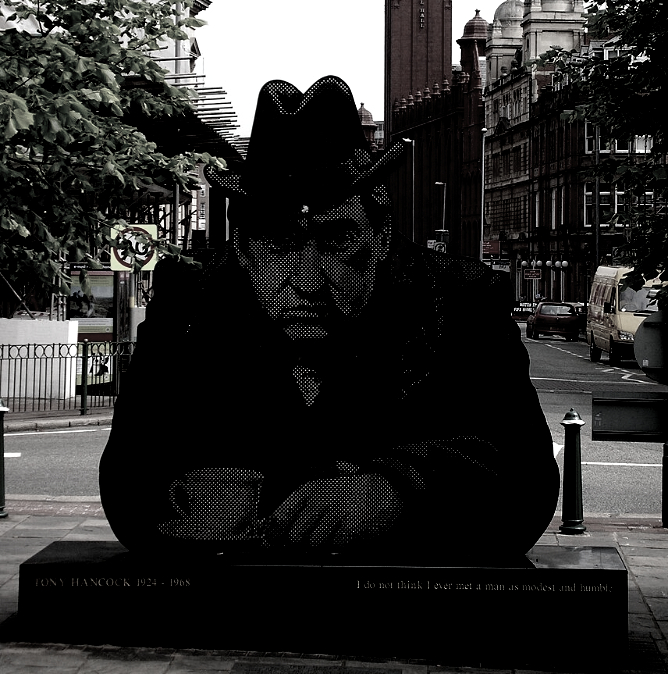
It’s Tony Hancock. Why didn’t I realise this earlier?
I looked up the hat: Homburg.
31 October
I saw Hancock in my kitchen this morning trying to eat a bowl of Cornflakes. He was sans Homburg. He didn’t answer but my line of questioning went something like this:
What are you, exactly?
Have I done something wrong?
He looked up at me with a supremely dower expression.
Getting ready for the Halloween party, I saw Hancock in the mirror behind me. He seemed to disapprove of my costume, I’m not sure why.
Izzie was in the hall when I arrived. She was trying to figure out who I was. Eventually, I said, ‘Think The Shining,’ and then she went, ‘Ohh.’ But even then I had to say I was Stephen King.
She went on to defend me against anyone who said my costume was not necessarily very Halloween. I was wearing large square glasses and a checked shirt. In truth, I wasn’t sure if this was very Stephen King. But I didn’t mind Izzie sticking up for me.
‘His head is full of fucked up shit,’ Izzie said. ‘He is horror personified.’ I have rarely seen her so animated. It took me back to that night at uni, at the Free Film Club, when she eulogised on Drop Dead Fred and punched Abigail Somner hard on the arm. I remember Abigail showing everyone her big purple welt in our next seminar.
1st November
Well, it has happened again. Twice in ten years. It feels different now, though.
Izzie came into my bedroom at six in the morning. I hadn’t noticed she’d left the bed in the first place.
‘There’s a man in your kitchen,’ she said, shutting the door. I told her it was either the spirit of Tony Hancock, or the spirit of Tony Hancock, the character.
She came to sit on the bed. ‘How long has he been haunting you?’ I hadn’t thought about it as a haunting. I told her: only a few days, that I thought it might stop after Halloween.
Izzie went to the window. She was wearing my approximation of a Stephen King shirt as an overshirt. My heart swelled.
‘We’ll go for a walk,’ she said, ‘and then introduce ourselves properly. Sometimes you don’t get to decide when these sort of things happen.’
We went for a walk around town, talked by the canal, saw the usual people milling about, and then went back to Hancock. He was sitting at the table, underneath the large clock I’d bought during a sale at Dunelm. Izzie went to shake his hand as I turned on Radio 4.
We were heading for the toilets. I could feel the Jägerbomb inside my cheeks. In the toilets, the light was nauseatingly bright. There was a tint of sputum to it. Adam locked us inside a cubicle. He gestured for me to peer into the bowl. He had an outraged look on his face, amplified by how much he’d had to drink. The word was je-la-ti-nous. ‘We need to get it out,’ he said. We used Adam’s jacket as a sling. It was one of his nice jackets, from Next. He came into school with it sometimes. There was a fair amount of sploshing before we had any purchase. ‘Count of three, we lift.’ His face was large. His sweat was the viscosity of milk. We removed the thing from the cubicle, then the three of us weaved our way out of Popworld.
I sobered up in the Uber. The jacket was between us, in the middle seat. Adam peeked underneath to see what the thing was doing. He toyed with the seatbelt, as if he wanted to lock it in, safe and sound. There was no radio on in the Uber. I listened out for the click-click of the indicators. Maybe they didn’t make that sound for new cars. That was a shame. I put my forehead on the window, not that I could see anything once we were out of Blackpool.
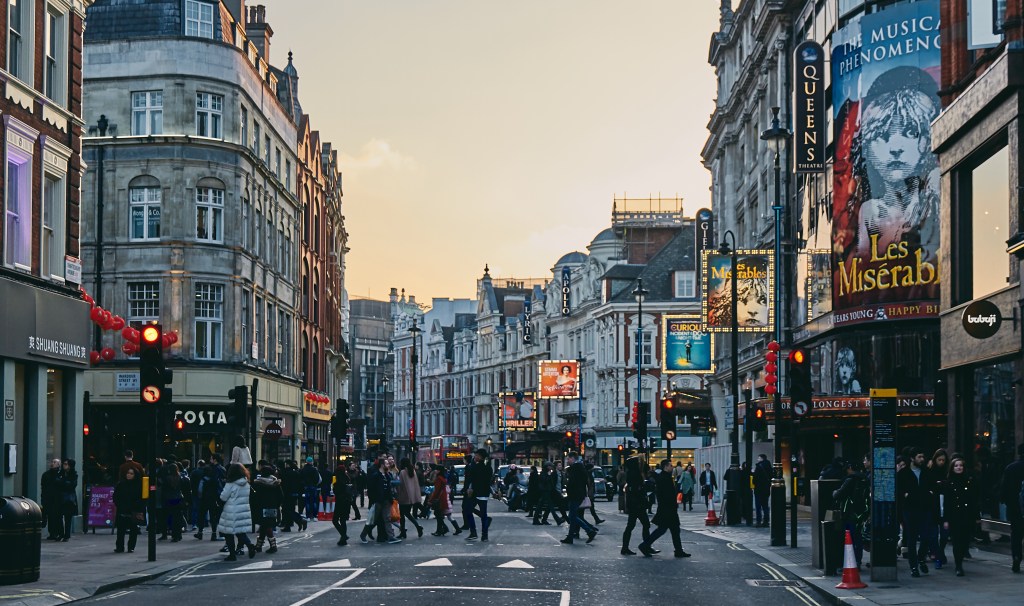
We used to get taxis a lot when we were kids. Karen would take money from Gavandra’s purse. Sometimes we wouldn’t get out of the cab. Karen liked to be driven around the West End. She would whisper the names of all the theatres as we drove by. Or, ater, when she was at Italia Conti, she read scripts in the backs of taxis.
I took my forehead off the window and looked down at Adam’s jacket. There were the faintest vapour trails coming off the lump between us. Adam noticed this too and looked at me with worried eyes.
‘Anywhere here is fine,’ Adam said, and the Uber pulled up. I was handed the jacket as Adam tried to find his keys. He lived in a flat at the top of the house. When we were inside, I asked what I should do with the jacket. He turned on the big light, then he said we should unwrap it at least, give it some air. A cat appeared. It sidled up to my shins. This was Judy. The kitchen was barely big enough for one person. There were two Christmas cards pinned to a corkboard. Adam placed his jacket on the hob. The thing had shrunk, like a raisin. ‘It needs water,’ Adam said. He filled the sink. I saw the plug on the sideboard and handed it to him.
‘Put some warm water in there,’ I said calmly.
We carried the raisin over and then lowered it into the sink. Immediately, its colour returned. He was like a planet bobbing in space.
‘I can see its eyes.’
Adam was quiet. His tongue was pushing up against his lips. He was going to be sick. I knew that he wasn’t a big drinker anyway, and it had been a surprise when he’d continued into town after La Bottega. I guided him to his own bathroom. He waved a hand. ‘I’m not drunk. Everything’s just so fast.’ I put a hand on his back. We’ve all been there.
‘Tell me something. Anything.’ He was slurring, eyes shut. ‘Something about you.’
‘Like what?’
‘Doesn’t matter.’
‘I was thinking about all the taxis I used to get in London, with my sister.’
‘I didn’t know you had a sister.’
The kitchen sink wailed. It was piercingly loud. I got up right away.
*
I realised I liked Adam when I saw he had the Wikipedia app on his phone. We were on PPA time. He was working on his iPad, pasting lyrics into a PowerPoint. We bought taught Year 2. Adam was only the only male teacher in KS1. He was handed the responsibility of Music Lead at the start of last year. He complained about the Kidz Bobification of the culture in general.
‘What do you look up on the Wikipedia app?’ I asked.
Adam put his iPad down. He picked up his phone and showed me a list of favourited articles.
‘Phonics?’
‘I was curious.’
‘And what did it say?’
‘Phonics is a method for teaching reading and writing to beginners.’ He sighed and reached for his cup of coffee. ‘I love shit like that,’ he said.
*
We worked in shifts. Neither of us slept. I don’t remember it being said outright that I was living in Adam’s flat, but it wasn’t like I was going to abandon Norman. I suggested the name on Christmas Eve. Norman was Karen’s white terrier on wheels. He had black eyebrows and Styrofoam legs. Our Norman could not stand but after a while he moved.
Adam erected a tent in the living room next to the Christmas tree. He didn’t want to lose the deposit on the flat by permanently damaging the carpet, and Norman did secrete. He last used the tent at Leeds Festival. The headliner in 2015 was Metallica. Inside the tent, it was written in permanent marker: Music Forever. This seemed like a very dweeby thing to write when everyone else, presumably, was getting off with each other outside the tent. I smiled.
Experimentally, one evening, Adam fed Norman a Calipo. Norman took it between what you could call his lips and ate it. The Calipo was with him all morning.
We took turns going to the One Stop, the only shop that had Calipos. My life was the flat and the walk to One Stop. While everything around us slowed down for Christmas, the shop stayed the same. Norman’s favourite flavour was cola. It left a brown residue around his face, which I wiped away with the spit on my thumb. He would roll and roll, all over the tent.
Occasionally, Adam would spend some time on housework, and I would be left to look after Norman. The more time I had alone with Norman, the more I felt I could tell Adam what to do. ‘I don’t want you vaping in front of him,’ I said, after one of my walks to the shop.
It was the end of December. Adam had by this time found time for thinking about school. He created what he called his Genre Chart, and he was going to email it to KS1 staff. I had, in truth, barely thought about school. It was as far from my reality as Alaska. When I thought about doing some work, it was in a dreamy sort of way.
On 31st December, I walked into town. I went to Card Factory and bought party hats. At home, Adam held Norman steady while I fixed the string around his bottom. I got upset because I thought the string might be cutting into his skin. But Adam said it was fine. He said this in a way which meant that Norman was difficult, that he was always being needy. We took our places for the Hootenanny. There was something about Jools Holland that reminded me of Norman. He was ebullient and odd, but you could see he was genuine. I started to cry. I put my head on the arm of the settee. In the early hours of the year, I found the leather jacket I’d worn to the Christmas party. I’d left it in a clump on the futon in Adam’s spare room. Fortuitously, I had taken half a blister pack of Lustral to Popworld.
*
Adam went back to school and in the evenings I would hear about the girl who had transferred from another school to his class. She was a new challenge. He was thinking about referring her to a speech and language specialist. In the past, I might have challenged him on this, intimated that it was too soon for a referral, but I didn’t have an opinion. Around this time, I thought that Norman would start to multiply. The idea became fixed in my head, during those long hours in the flat. He was blotchy around his middle and I thought that this would mean other Normans would be popping out of him soon. I would have to manage that.
This was his first real illness. The heat radiating off him was intense.
Norman always made noises when rolling about, because he was so holey and succulent, but now he was deathly quiet. He’d dried out, and I was reminded of the night we had first brought him home and put him in the sink.
He just looked at me, helpless.
Thinking that fresh air would be good, I took Norman for a walk. I reached the bus stop before I had to turn around.
It was only when this period of illness was over that I understood how useless Adam had been. Slyly, during an argument, I said, ‘You were the one who wanted so desperately to save him.’ What I said hurt me more than it hurt Adam.
Every conversation was in some way about Norman and how he had changed our lives. Adam complained about how tired he was. SLT were doing his head in. He wanted sympathy; that was what was so gross about it.
‘Are they asking where I am at school?’ I said.
‘You’re sick,’ he said, and I wasn’t sure if he was answering my question or making a statement of fact.
*
There was a man who walked down our street sometimes, and I would watch him from our window. Shouting, ‘No one on this street cares, I’m going to step out into traffic and kill myself.’ In his Ghostbusters jacket and Spider-Man satchel. Sickly green Crocs.
I no longer thought of myself as a teacher, but I kept one hand in the world of phonics. I made up stories. Norman was older now. He needed an imagination. I developed Reithian values. The more stories I made up, the more I tried to get in words with more complex phonemes, or I’d throw him an alien word with made up phonemes to see if there was any jolt of recognition from him.
I also introduced him to music. Songs that were popular when I was a kid. I found ‘Wonderwall’ by Oasis so profoundly moving, I had to turn it off before the end. They were a stupid band; it was a stupid song. I felt myself getting shaky even thinking about it.
It was hard to know if Norman enjoyed any of the songs I played for him, and in those moments, I wondered if we were connected at all, which made me feel that I had wasted my time. I put A Hard Day’s Night on Adam’s big flatscreen TV. It was on BBCiPlayer. I drew the curtains. The black and white shone onto Norman, and he absorbed it, and I felt better about his education. I was always running into walls, but this was a good day. It was a nice moment. When Paul McCartney said again how very clean his grandfather was, Norman rolled into his tent and said, ‘Klin, veri klin.’
Karen was on the news. The photo they used on the BBC News site was from the premier of All the Dolls, the year before. Or it might have been the BAFTAs. She had been driving with a friend – unnamed – through Italy. There was a collision, and she’d been killed immediately. It hadn’t come up as a news alert on my phone, so I came across it at a random time during the day. Norman was now able to sit nicely in a chair, and that was where he was when I started reading this, about my sister. I looked over briefly and saw that he was spewing gently onto his chin. The dress Karen wore was silver. She absolutely shone. I got Norman from his chair and started to tell him about his aunt. ‘London,’ I said, trying to sound it out for him, slowly, because it felt like an important word. I was squeezing the city into the gaps between the phonemes.
‘That’s where things happen – apart from you, you happened here,’ and I touched my chest, but as I moved my arm, Norman fell, and he splattered onto the laminate floor in the kitchen. Judy came to lick up the mess. I didn’t feel stupid at all.
[Top photo by Pedro Szekely from Los Angeles, USA, taken from Wikipedia.]
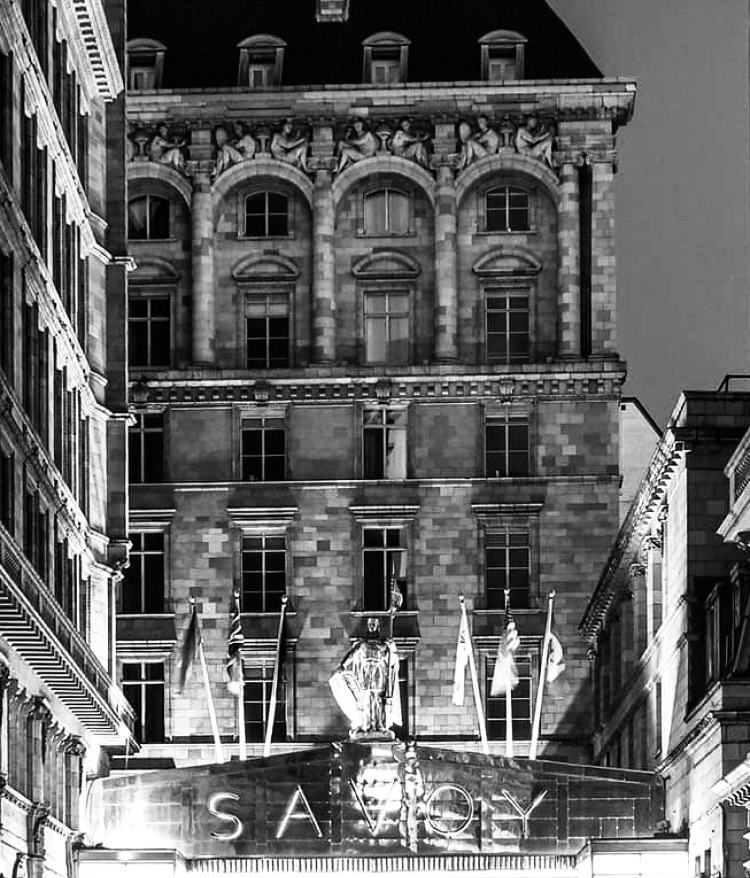
They made a documentary series about the hotel a few years ago. It was on ITV but you can find it on YouTube now. All very ‘Boris’ coded. They started filming before COVID. Those pre-COVID sections have a nudge-nudge, look how relaxed we all were, quality. You can see me at the desk, in one shot, but I was never considered interesting enough to be one of the ‘characters’.
I saw Tim today. He was behind me in Pret, opposite Euston Station. During my time at the hotel, we lived together.
‘Mum’s bad again,’ he said.
We stood for a moment by Robert Stephenson and talked about Manchester. This was something we never did when we lived together, in that literal attic across from the Lyceum, but for those five minutes today we were nostalgic, even expansive.
‘Can I say you look well? Is that something people say?’
In truth, he was barely recognisable. It was the clothes.
‘I have money now. Mr Lewis whispers in my ear, “I’ll wire you.” And he does.’ Tim – the dramaturge – raised his right hand and said, ‘Merci, Mr Lewis.’
‘Him,’ I said. ‘Still.’
‘“From the Ether into your lovely pocket.”’
Then it was time for Tim to get his train. I hadn’t even asked after his mum, in the end, not really. I walked on. My desk at the Premier Inn is simple and I like it. I was on the afternoon-evening shift today. I thought about Tim arriving in Manchester, in his suit. He’d used pomade in his hair. I thought about Mr Lewis waiting for him to return.
*
By the time I came to the hotel in 2017 as a concierge, Mr Lewis had been in residence for a decade. He told me once that he moved in the day Blair moved out of 10 Downing Street. He did not spend all his time at the hotel, it was just that if he wanted that suite, it was always available to him.
For a while, I was playing a role, and then I spent so much time in the role that it became my life, and relaxing after a shift felt almost phoney. I would leave Tim to his own devices, staggering around the space between Nelson’s Column and the National Portrait Gallery in his Pikachu costume, sweating his balls off. We didn’t talk much after a while, but we were still friends. Mr Lewis became one of my favourite parts of the job, because his requests were often so lively. One night, he rang the desk just before eleven:
‘I’d like Paddington–,’ as he paused I noticed a very tall man reading his Pretty Woman programme from the theatre next door, ‘-Paddington, please, if poss.’ In the background, on the phone, I could hear ‘Satellite of Love’ playing very loud. ‘Not a teddy. Flesh and blood.’ Mr Lewis ended the call. I got out my own phone and texted Tim: Could I call you, there’s fifty quid in it? Five minutes later I was on the phone to Tim.
We met outside and he followed me through the innards of the hotel. He was carrying two bags for life. The head had its own bag. At the top of the stairs, waiting for Tim, I saw Paddington’s glassy black eye. I imagined choking on it. I looked away and stared at the concrete wall. I briefed Tim before we left the stairwell.
‘Mr Lewis has lived a life,’ I said, unsure what I meant by this, other than it was something I would say in my role, as it sounded somewhat discreet, although not really.
‘Got you.’ Tim had shaved his head earlier in the week. I realised that he’d done this for the audition. I hadn’t asked how it’d gone.
‘He was high up in the BBC, after the war.’
‘Which war?’
‘This is serious for me, Tim.’ I wasn’t sure which war.
‘How old is he?’
‘Nearly a hundred,’ I said, because I thought this must be the case.
Tim was dazed, but not sleepy. I thought this would go down well. We made our way to the suite. I knocked on. Inside the hallway, I told Tim where he could change. He disappeared. Mr Lewis was on the settee, watching Strictly on mute, listening to his music. He was in his baggy white boxers and Lou Reed t-shirt. We exchanged a few words. Mr Lewis gargled.
When Tim emerged, he was not Paddington at all. He’d lied. I recognised this costume. We had made it ourselves at uni, for a showcase, in tribute to Mike Batt. It was only partly ironical. What emerged was a womble. Great Uncle Bulgaria himself. The white beard had seen better days, but still Mr Lewis was transfixed.
After, in the morning, I saw Mr Lewis in the restaurant with Tim. Usually, he had breakfast in his room. Later, Mr Lewis asked for a table at the Ledbury. I dutifully made the call and secured the reservation. I worked my magic. Tim did look sleepy now; his eyes were bloodshot. The bags for life must still be in the room, I thought, idly, before another guest stole my attention.
On opening night, I saw Tim in the play. Mr Lewis had pulled strings, as it goes. He knew people. Tim was good in the play but in the bar admitted to me that he was done with the acting life; he had found a new vocation. He had to do the washing up for Madame Cholet.
Mum has said she will only come back for the funeral. Her replies on WhatsApp are terse. I reply in kind. By the time I put her away, I’m exhausted. I have no clue what time it is over there right now. I notice the black Reebok hat that has fallen behind my bed, and I leave it there.
Marian’s teeth come in overnight, painfully. There are circles of blood and saliva on my pillow; wet and dry overlapping. I pull down the cord that turns on the bathroom light. When I look in the mirror, Marian’s face is there, fully formed, as I suspected it would be. I move my mouth and she moves hers. Marian was lacquered over me like a white paste, but now the only difference between us is height.
Mum texts, just after I’ve had the call to say Dad died overnight. I wasn’t there, which is difficult to believe. They don’t ask if I’m okay, but I suppose it isn’t their job, or maybe it is. I put on my coat and shoes. The day before last, I saw Marian’s worn Dr Martens, spruced up to an extent, in the window of the British Heart Foundation. I want to go in and ask for them back, but I wonder if they’d recognise me.
In the car, I touch the filling at the back of Marian’s mouth. She complained frequently about her teeth. She once went out with a dental hygienist, when we were at university, just for the tips he might impart. It is the shape of the inside of her mouth that is surprising to me. I soothe the same filling with my tongue, close my eyes, and start the engine.
My tongue but Marian’s teeth, I think, as I turn onto the main road: how on earth have I made that distinction?
The room is unbearably close. Dad is describing a trip we took to London when I was twelve.
‘It was your birthday,’ he finishes. He smiles for a long time.
What he is recalling is the weekend he took Marian to see Cats. She had begged him for tickets, and Mum leaving for Florida was probably her trump card. I remember the poster on her side of our room; the amber eyes and black background, and the dense text below.
It wasn’t her birthday, but for Dad’s sake, let’s say it was. If Florida had already happened, we would have been on the cusp of teenhood.
‘Dad, that was Marian, not me.’ I say this quietly, hoping that it won’t register. It is a battle I have already lost, on both sides. He has heard me, but he does not understand.
I do remember, during that period, I was babysat a lot by Nana. Perhaps while they sat through Cats, she was teaching me peg solitaire at the dining table. Dad wouldn’t let her smoke in our house, but when he wasn’t there, and it was the three or two of us, she existed in this cloud of smoke. It was my job to carry the Ruddles County ashtray around, wherever she went. There were lots of times when Marian was out, and it was just me and Nana. She taught me to make strong cups of tea. ‘But no sugar,’ she said. ‘Once your teeth go, they go; there’s no getting them back.’ Of course, she had none of her own teeth left.
‘It was your birthday,’ Dad says. Because I was thinking of Nana, when I look at him again, I see a little of her in his face. ‘Terrible,’ he adds.
Driving home, I try to recollect times Dad took me on a special trip, but I can only remember the times I rejected him. I stop at Sainsbury’s. After ten minutes of wandering I have added nothing to my basket. I buy a packet of Airwaves and leave. The gum does nothing for my sinuses.
Before bed, I wash my face with a flannel. The quiet in the flat feels damp. I stand in the bathroom and remember how after Mum left for Florida, all those years ago, Marian said she’d never leave me, she wouldn’t let us be apart, and if that ever happened she would cast a spell to reverse it. She was more prone to magical thinking, but sometimes I was convinced.
The old neighbours played bhangra music through the night. I never thought I’d miss them. I put the flannel down and it sticks to the inside of the sink. There is a port-wine stain underneath my eye. Marian would arrange stones on our bedroom floor and say, ‘I’m casting a spell for you to never leave me.’ I thought at the time it was odd she didn’t just cast a spell for Mum to return. She sat in that circle for hours, all night, in her torn Daisy Dukes.
I moved Dad here at the end of October last year. It was my best option money-wise, and moving him into my flat was never a practical solution. There were decorations the first time I visited. BEWARE. HELP ME! There were bloody hands and green zombie eyes glued to the windows. We are talking about Cats again.
‘Do you remember where you took me for tea after?’
‘No,’ he says, attentively.
‘Pizza Hut.’
He laughs. ‘It was a treat.’
I gleaned this fact from Marian’s diary. She wrote pages and pages at that age. I know that from the beginning of Cats to the end, she needed the toilet. I know that Dad shouted at her for spilling Coke on the hotel bed. I had forgotten they had stayed over in London. The train was so busy Marian thought it would stop moving; this was a real fear. There was a man that kept staring at her in the stalls. She thought the pavement felt hotter in London, although she knew that wouldn’t make sense if she said it aloud. ‘That was a special weekend,’ I say.
‘Yes. Now, be careful, she’s watching us.’
There is a care worker standing by the window, but I can’t be sure Dad means her. I watch as she turns around and walks past us. She smiles down at us. I’ve had a conversation with her before. I told her that I work at the leisure centre on Moor Park, that I come home smelling of chlorine and I can never get rid of the smell. She found this funny for some reason.
‘I won’t call you Spot, because I know you don’t like it.’
‘I don’t mind it. I haven’t been Spot for years, though.’
‘You’re a grown woman!’ With each word, he thumps the arm of his chair: ‘You – are – a – grown – woman.’
It is a chance meeting. David sees me first. I have come to No Filter to read The Bee Sting, which was the last book Marian posted about on her Instagram. I am at the table by the counter. David is in his running gear. He’s wearing a black Reebok hat. He is served his takeaway coffee but imposes himself on my table. He starts to repeat how amazing it is that we have bumped into each other like this. He has run from Squires Gate. I ask if he wants to help with a bookcase I have bought from Ikea. It’s been sitting, boxed, in my room for a week, and I haven’t had the time to make it.
‘Or I’ve been putting it off.’
‘Of course. Of course.’
We walk back to my flat opposite the library. David hasn’t said much at all, but I wonder if it’s because he has been leading up to this. He pulls me in and kisses me on the mouth.
From the corner of my eye, I see crumpled leaflets from local kebab shops on the occasional table. We walk up the stairs together, still kissing awkwardly. He tastes of coffee and milk.
David, swept away, takes the keys from my right hand and unlocks the door for me. I am not sure if this is supposed to be romantic, a display of his masculinity; I wonder how Marian would have reacted to this, but then I know that she would have liked it on some level, even if she knew David could be patently ridiculous in these sorts of moments.
In bed, I do something I have never done before, and David pulls back. He looks at me amazed. The sex doesn’t last long. He lays prostate on top of my lavender covers. Then, perhaps it was inevitable, he starts to cry. His lycra shorts are on the floor by my wardrobe.
‘Just why.’
‘I’m sorry.’
‘Why?’ He points to my face. ‘It’s fucking uncanny.’
‘I don’t think it is. I don’t think it is uncanny.’
He then collapses into the sheets. Ten minutes later, he starts to apologise for his outburst but then tells me that everything Marian did was selfish, especially that.
‘Perhaps if you’d been more present,’ I say.
‘I was. Not enough, obviously, but I thought I was – being present.’ In response to this exchange, David attaches himself to me like a limpet. I let him. He tells me things Marian has missed, but then he speaks to me as if I am Marian.
‘Rome,’ he says. We would have been married by now, too; that is the most obvious thing that did not happen because of what Marian did. While David talks, I remember little details about him. We are on a bed in a hotel in the Lakes. He tells me about the kingfisher he saw on Christmas Day with Lucy, his sister, in 1997. I pull away from him. I tell him that I am not Marian. I find this difficult to believe.
*
I collect Mum from Preston train station. She landed in Manchester and stayed in a Premier Inn overnight. She is wearing a velvet blazer, black suit pants, and patent shoes. Her grey hair is pushed back by an Alice band. I take her suitcase.
‘Marian,’ she says, after only the briefest flash of confusion. She only blinks then repeats my name, and says I look tired.
‘I am tired. My head feels like fog.’ Mum does not respond to this. She either doesn’t know how to deal with a statement like this – likely – or she is too preoccupied with sheltering herself from the rain.
‘It’s raining.’
‘I’m sorry,’ I say, unlocking the car, ‘I didn’t plan it.’
‘I know you didn’t plan it, Marian.’
I drive us across the bridge and past County Hall. We are at the docks when I ask Mum how her work is.
‘Complicated.’
‘Is that good?’
‘Marian, I have had a long day.’
‘You’ve had a long flight. And you stayed in a hotel.’
‘Yes. You know what I mean.’
‘I do know what you mean,’ I say.
‘Stop it, you sound just like Ruth.’
I drag Mum’s case up my stairs. When I find her, she is in the kitchen filling the kettle. Throughout the funeral, her case was in the back of my car. It wasn’t a long service, and there was no wake. This man had no friends that I knew about. I am listening to the kettle boil as I turn over Dad’s life. That was it; that’s all.
‘Thank you, for organising.’
‘It’s fine,’ I say.
‘Don’t be obstinate.’
I didn’t realise I was being obstinate. I get the jar of Nescafé down for Mum, and a tea bag for me.
‘What’s this mug?’ she asks.
‘It’s not anything. It just has cats on it.’
‘You don’t have any cats.’
‘No, but I like them.’
‘Do you have lots to sort – the house?’
‘Yes, lots.’
We sit at the table, by the skylight.
‘How’s work?’
‘I said. Complicated.’
‘You like it that way.’
‘I heard on the radio,’ Mum sips her coffee, ‘that inner peace is only possible if you are focused on one thing’ She points one finger forward, presumably towards the one thing she is, or will be, focusing on in the future. I have never given her quest for inner peace much thought.
‘Why wasn’t your sister there today?’
‘Hm.’ I focus on the heat coming from my mug. ‘She was.’
Mum scratches underneath her eye. This is something I do. It’s odd to think that she does this in Florida, in her white apartment, without thinking about me at all.
‘Do you think Dad was lonely, in life?’
‘In life?’
‘He didn’t have any friends.’
‘Marian, no one has any friends.’
‘I slept with David. The other week.’
Mum slowly starts to shake her head. ‘Where is he?’
‘I don’t know.’
Mum sits back in her chair as I lean forward. I wonder when she will leave, and what her plans are now. I am then forced back from the table by an excruciating pain in my spine.
On the floor, my back swells and stretches. Mum is over me, then crouching by me. She stops my skull from cracking too hard against the floor. She holds either side of my head firmly. I can smell her sweat. I am unable to hear anything apart from blood pumping into my neck. I focus on one thing; I focus on a line of cola flowing from a can onto white hotel sheets.
When it’s over, I am a foot taller. Mum puts me to bed and closes the door to my room.
They are making improvements to my street. When I drive off in the morning, I am accompanied by a billow of grey gravel. I feel like I’m in the Old West.
At the GP’s this morning, 9.35am, I filled in Marian’s details on a double-sided piece of A4. The paper was poorly photocopied.
I said my back hurt sometimes, and also explained how I was struggling with my sleep. She gave me exercises for my back, and suggested physiotherapy if nothing improved.
‘I don’t mind it.’
‘What’s that?’ she asked, softly.
‘The pain in my back. I don’t mind.’
I also asked what the chances were of suffering from the same illness as Dad.
‘He called it cancer of the skull, before he had it, and then he had it and had no idea he did. If you see what I mean.’
She talked to me seriously. ‘I do, Marian.’
I was sad when I had to leave.
Instead of driving all the way to Moor Park, I left the car on double yellows and walked into town. I bought those boots from the British Heart Foundation, and dropped my old pumps into a bin on the front. I walked to the end of the pier, remembering all the things I didn’t say.
I’ve told the story before of your mum plying me with bottles of Becks at her birthday party. I might give a little more. I didn’t know anyone there. I was fifteen. My parents were furious when I came home confused and smelling of smoke. The truth is that I have been more drunk since. I suffered worse hangovers when we were at university. But it’s a fun story to tell.
I was inspecting the green bottle when you told me to roll down my shirtsleeves. We were by the fire exit. Queen Jane was on the stage. This bottle contains mysteries, I thought. It unlocked a part of the adult world. I was catching Becca’s eye. I kept looking at her, emboldened by the Becks. Your sister smiled the first time, then looked away. You were pacing the length of the fire door.
‘We look stupid,’ you said.
‘My trousers are wet.’
‘Why?’
I waved this away. ‘Doesn’t matter.’
You stopped underneath the Fire Exit box, green like my bottle. You put both your hands on my shoulders and we faced each other. I remember laughing then I stopped. I don’t remember what you said. I would only be making something up.
‘Have you had a haircut?’
‘Yeah,’ you said, still holding me opposite you. ‘Come on.’ You went to find your mum. It was nine o’clock, the appointed time. She was in a green velveteen dress, and her hair was high above her head, an elegant bird’s nest.
‘Everyone,’ she said into the mic. ‘Gather round. Let me introduce to you, Johnny and Finn, our performers extraordinaire, who are going to take you back. Way back.’
We were on the stage now, too, waiting for our cue. It hadn’t come. Your mum stayed by the mic, waiting for something else to say. She thanked everyone for coming.
She got off the stage, stumbling slightly in her heels, and stood very close to the front. Becca was at the back of the hall – she flicked two sets of lights off.
We opened with ‘Like a Rolling Stone’. I was to your left. I was watching you the whole time. Your eyes were closed. My trousers were bone dry by the end of the set. During ‘Hurricane’, I looked out at your family. People had gravitated to the front to be with your mum. I can’t decide if I saw her cry, or if her eyes were watery, or if she looked up at us stoically, as if to say, Proud of you, boys. But all of that is probably false. I said to you, ‘No one seemed to care about the n-word, in the end,’ and you nodded, sagely.
After our performance, as Becca fixed the lights and put the music back on, and your dad offered around the last of the sausage rolls, your mum invited us outside the hall for a cigarette.
‘Finn?’
‘Cool. Thanks.’
‘You don’t have to,’ she said, shaking her head. You lit a cigarette, inhaled, then handed it to me to try.
‘Next. You need to perform for real people. Strangers. You should do an open mic.’
‘Don’t you need a license?’
You looked at me.
‘Or something like that.’
I coughed furiously and turned away to face the brick wall. Time was elastic. Or it was like fudge. I couldn’t quite decide.
‘The question that you’ll be thinking now is,’ your mum looked down and shook her head momentarily, ‘Dylan and only Dylan, or introduce more, or write your own stuff. Your own stuff is an obvious endpoint, but if you commit to Dylan, that’s perfectly valid, perhaps more valid. Enough material to generate real magic. These are questions that you need to think about.’ You were nodding. ‘Both of you. You mustn’t give it up, that would be a travesty, honestly.’
You repeated most of this later to me the next day, when we met up in the park, hungover but bright. I remember looking at the spire of Holy Trinity and thinking, Fuck off. Nothing was as real as my hangover, and the spire was too objective for me to handle at that moment. We might have been on the swings, early in the morning.
‘The question is, where? For the open mic.’
I waited for you to present me with the answer. I was used to that.
‘What do you think?’
‘I don’t know, I’ve never done one before.’
‘Also, do we even want to.’
‘I think we should,’ I said, and that, for whatever reason, sealed it.
At the party, after the conversation with your mum, the shared cigarette and my staring at the brick wall for a bit too long and with too much intensity, the rest of the party felt heavy with possibility. I decided that if I was to tell Becca how I felt – how I would die for her with less than a moment’s notice, how the mere thought of her made me feel a bit sick – then I had to tell her tonight. I camped in one corner of the hall, and waited for her to come near me, and eventually she did, although I was by the toilets.
‘Becca.’
As if anticipating that I was about to say something mortally embarrassing, she leaned in and said, ‘You were really good,’ then disappeared into the loos.
I don’t remember much after that, even the above is mostly guesswork. But I know that the performance in the village hall happened. I know that afterwards I was sick inside a shrub outside the hall, and it took me an hour to walk across the village to my house. In the morning: the third degree. I escaped out of the house and texted you. You were up. I got a Coke from Londis and walked to the park, and waited.
‘My mum’s pissed off with me,’ I said. ‘About last night.’
‘Why?’
‘I think she just thinks that I don’t really know any of you.’ Perhaps I was still a little drunk, because Mum hadn’t said that at all, although she might have been thinking it. She was pissed because I was drunk, and I had offered up the information that I had smoked my first cigarette. I was proud of myself. After that, she wasn’t so much pissed as bemused. She went back up to bed. Dad was in his office, noodling, which he liked to do from about six in the morning.
You shrugged. ‘Does that bother you?’
‘No. Sometimes I wonder if we’re actually friends, or if you’re just using me for my guitar prowess.’
‘Fuck off,’ you said. This seemed to resolve a lot of issues.
I don’t believe you… you’re a liar… play it fucking loud.
This is a chapter from a story I’m working on at the moment. All very much first draft stuff, but I wanted to share the above to give you a flavour. If anyone is interested in reading more, drop me a line and I’ll gladly send it over when it’s done.
You’re surprised the school’s still open, but if there’s one place in the country that stands for stiff upper lip above all else, it’s Propert College. Not a college, though. Something else that has niggled you. A day school for girls.
A boarding school would have been a bridge too far, but you could convince yourself that a day school wasn’t as – there, you’re thinking it – elitist. But it is. It unquestionably is. It is. After Evie’s first term, at weekends you noticed how her voice had changed. You’d expected her voice to deepen, to match yours. And it did. But this was different. It wasn’t only that her phrases were more clipped, that her consonants were more pronounced, like crystal. She came out with her own ideas, slowly at first, but with each term, she gained confidence. It was a bit shocking, you thought, that she’d picked up a new way of talking so soon. It was as if she was keen to shake off everything she’d learnt since birth to age eleven. You could put an exact price on that confidence: £7,726. Does that make it better? There’s causality; this is what you paid for.
When Evie was in the third form, Katie joined, and history repeated itself, not in precisely the same way, because Katie is – you’re sure – her own person, but enough to suggest that the girls would have turned out differently if they’d been to a school like yours.
But how would they be different? If you can’t know, is it worth asking the question? You think of all the hypotheticals you manage at work. The similarities between the world of finance and childrearing; the peaks and troughs, the hypotheticals, the unknowable quantities, the constant worry. Above all – the worry.
Evie has been prepped for St Andrews. All being well, she’ll go next September. Katie, meanwhile, already, at her age, is keen on Cambridge, over its famous boat race rival.
But the news this week has stopped all talk of St Andrews, or possible future Cambridges. They found Ms Gisford with her husband and their seventeen-year-old daughter, Samantha, dead, splayed out on the school’s rifle range. The police are confident that there was no third party involved in the deaths. This strikes you as strange. At the back of your mind, unbelievable. Especially when you remember the photos in this year’s prospectus. How happy they looked. For Mr Gisford to shoot his daughter, his wife, and then himself: beyond comprehension. But no, it isn’t. Because it has happened. It is being reduced to a regular topic of conversation.
At least, that’s the rumour. The part about the rifle range. You imagine the scene. The school cleaner doing his dawn round. In the gymnasium. He notices that the entrance is unlocked. The door to the rifle range, which is accessed by a wide but steep set of stairs, is also ajar. The cleaner descends. He finds the bodies, calls the police. He tries the head’s mobile, before realising that there is a phone vibrating on the floor, next to one of the bodies. He hadn’t recognised Ms Gisford – not due to shock, he was an army man – but because the head had been obliterated. But then, would the cleaner have the head’s mobile? Unlikely, maybe.
Spaghetti bolognaise is the choice for tonight. This comfort food, autumnal food. We’re bridging the gap between November and December. You think you’ll go away, see if the house in Ambleside is free. Could you afford the time off? Surely, you could take the girls away for a few days. Under the circumstances, you imagine the school will be lax about giving girls time off to recover. The shock. They were never army men. Besides, you have paid for the term. It’s done, dusted. If you want to take them away, you will. But no, you won’t. Katie would come. Evie would only come begrudgingly. The school teaches its girls to be begrudging but polite; belligerent but calm. They’re well-armed.
The girls are due back any minute, and you’ve recently ended a difficult call with Simon. He positioned his camera so you could see the spread of the office, the whole floor, high above the City, a veritable hive of activity, as Jim would have said, when Jim was still your boss. But now: Simon.
You open the tomato puree and cut yourself on the lip of the sharp, metal tube. ‘Shit.’ You wonder if the girls have rubbed off on you. On your proud comprehensive education and (dare you say it, even think it?) working class upbringing. In your younger and more vulnerable (or, less vulnerable) years, you conjured a limitless stream of swear words to replace your now dainty, italicised, shit. You put down the tube of puree and catch the blood in your palm.
Katie arrives home first, says hello, because she’s nothing if not polite, and goes upstairs to her room. You call after her, ‘Food in thirty minutes.’ Why thirty minutes, not half an hour? When did you start saying thirty minutes?
You wonder what’s been said today.
Evie comes into the kitchen. They catch the bus home together. You have given them lessons in public transport, which you think their peers might have missed. They are as comfortable travelling on a Stagecoach bus as Propert’s own air-conditioned coach.
‘How was it today?’
‘There’s going to be an assembly tomorrow.’ She gets herself a can of Diet Coke from the fridge. Adam talked you into this fridge. It cost £1,999. It has two doors, and an ice maker. Evie shovels ice out of the draw, and puts it in her glass, before pouring her drink. You could have saved the money, you think, idly. Or spent it differently. Sometimes at night, before bed, you see green and red lines against a black screen, and you wonder what was there before. But the money you play with at work is different, is almost fictional. It could never have been exchanged for a fridge. You’re running your cut over cold water. It numbs it. Evie asks what you’ve done to your finger.
‘Do you need a plaster?’
‘No, it’s fine.’ You tie kitchen roll over it, tightly, and get back to the spaghetti bolognaise.
Evie, Evelyn, has inherited her father’s height. His lank. She is a head taller than you, at seventeen. ‘There was an announcement at registration. The school is in a period of mourning.’
‘I was surprised they haven’t closed it.’
Evie considers this but says nothing. She sits herself at the table behind you. You pick up the puree again. You ask if there’s any news.
You say, ‘I saw a report on the news, at lunchtime. It was surreal, seeing the school.’ You think this is the type of conversation Evie will find engaging.
‘I saw that. You can tell everyone looks down on us.’
You’re chopping onions. Out of stubbornness, or sheer determination, over time you have learnt not to cry when chopping onions. ‘Looks down on you?’
‘Susan Copeland says it was triple suicide.’ Katie has appeared, ghostlike. Her face is pale, in fact. Her growth spurt is delayed, or maybe it will never come. She will be fourteen by the end of the year.
She has changed into her Cambridge hoodie, grey with black and red detail. Evie says, ‘That’s ridiculous.’
‘Why?’ It is a genuine question from one sister to another. ‘Stranger things,’ Katie adds, leaving it at that. She has lost the robustness of her childhood body. Puberty has made her convex.
‘That doesn’t mean it did happen,’ Evie says. ‘We know what happened.’
‘They were found on the rifle range, weren’t they? I heard that today.’
Both girls stare at you. Katie is leaning against the kitchen counter. Her hands are clasped at her front. She places both in the pocket of her hoodie.
‘I haven’t heard that.’ Evie picks a grape from the fruit bowl, in front of her. She holds it for a moment. ‘They were found at one of the properties.’
‘The rifle range?’ Her eyes grow even wider. You understand, her whole day has been filled with speculation. But where did you hear about the rifle range? Adam arrives in the kitchen. His voice fills the gaps in the space, and there’s no room to think. You boil a pan of water. When Adam comes in, Evie leaves. She has some prep to do. You tell her, food won’t be long.
Evelyn
Your phone is off, and it is oddly liberating. Mum is at the table. You’re getting ready to wash the pots. It was spaghetti bolognaise tonight. Everyone knows they’d feel better if they left their phone off for the day. Today, you have let the battery run down. It lasted on one percent for a surprisingly long time, between school and home. On the bus, you watched the bar in the top right corner, which had been reduced to a sliver, and watched for the screen to turn black. It happened when you weren’t looking. Most people would benefit from having no phone. You understand, this is quite a high and mighty thing to think, and you’re certainly not above your phone. But today – you let it die, and you liked it. The rest is silence, until you plug the charger in. What did people do before the iPhone? But you’re tired and uninterested in your own question. You need a distraction. There is a golden glow. You look out for a second, fixing your marigolds.
What happened on this spot three hundred years ago? You would have been happier; life would have been simpler. It’s nice to imagine you would have been content, because what’s the alternative? Worse than now? That’s the last thing you’d like to contemplate.
You think about the fact that at midnight tonight, it will be forty-eight hours since Samantha and her parents were found. A few days after that, it will be a week. Soon, it will be a month. And so on. In your twenties, which are not so far away in the scheme of things, will you look back on this episode? How will it appear? Could you smooth it out, turn it into an anecdote, a factoid about yourself? I went to Propert, I was there when those shootings happened. But that seems unlikely.
Mum is on her MacBook. Both you and Katie have the newer Pro models, but your mum makes do, is proud of the fact that she still uses the first MacBook she got in, like, 2011. She uses it to make a point. It’s not like she couldn’t afford the latest one. But your mum has odd lines she won’t cross. Her iPhone is still an iPhone 11. But then, she has no problem flying to Zermatt to ski every August. ‘What’re you up to?’ you ask. She sighs. ‘Just finishing up some work.’ You wonder why you asked. She goes back to her typing, and you turn back to the washing up. This is another thing your mum is keen on: the dishwasher can only be used at Christmas, and on any other day, the pots are divvied up between you and Katie.
When you plug the charger in, how many notifications will you have missed?
Considering the last two days, you’re coping well. You’re not sure. Perhaps they’ll be no messages to only you but lots to the various group chats. Girls of the Upper Sixth. It’s no surprise which girls are keen to organise get togethers, minute silences, gushing Facebook posts with everyone tagged. That’s the real reason you let your phone die, why you marked it DNR. There shouldn’t be this sort of organising. It’s a mufti day to them. Just another event to get their claws into. Some of your classmates have no dignity. The side plate you’ve been sponging for however long, slips away into the bowl, lost in warm, white suds. No one knew, know one knows, about you and Samantha. You barely knew yourself. Something would have happened, if you’d wanted it to, if her father hadn’t shot her point blank, earlier this week, before turning the gun on Samantha’s mum, then himself. It’s what could have been that upsets you, but it’s not even that. Not quite. You wonder when the rumour about triple suicide started, and where it came from, and how these phrases are being fed up and down form rooms. The pots are done. You clean the surfaces. Mum closes her laptop.
‘How’s your finger?’
She says it was only a little cut. You’re not really listening.
Be honest.
You’re thinking about Mr Epping’s lesson on entropy. Order and disorder. This takes you back to Samantha. Notifications. We are a text-based generation. As Head Girl, you are to speak at tomorrow’s assembly, but what is there, really, to say?
Katie
Your phone has been resting in your pocket. You take off your hoodie and hold your phone in one hand, and you feel disappointed when once again there’s no text. The texts have been regular since the start of last term, always around teatime, but since Tuesday, they’ve stopped. The significance of the date is not lost on you.
One of Evie’s friends has written a post on Facebook, and everyone seems to be putting their messages to Samantha there. She has posted an album of photos, on behalf of the Upper Sixth. Photos from Samantha’s short time at Propert. She only joined when her mum became head. Most of the comments are simple but elegant, but there are a few heart emojis, which you think is somewhat distasteful. You wonder if the person behind your teatime texts is taking a break out of respect for Samantha. It must be someone in school, you think. You lean over to open the window latch. You sit cross-legged on the bed, scrolling up to the first text. There has been very little variation since the beginning. Katie Fletcher: smelly cunt. At first, you were frightened, upset, unnerved, but you grew to expect it, and now it’s been taken away, you feel almost bereft. You had thought it might be the preamble to something bigger; something would happen at school. But nothing did. Only the texts. Katie Fletcher is a smelly cunt. And only once, Katie Fletcher smells like a cunt. But this last example is an outlier, it feels like it came from another author.
You have a shower. It’s almost eleven. Your bedroom is on the floor above your parents and Evie, and you have your own bathroom. It’s yours, Mum said, if you keep it clean, if you look after it. And you do respect your bathroom, you keep it in order. You dry yourself. You have left your phone on the bed. You’ll get into your pyjamas, read a chapter of your book, Atonement, which you are trying to keep a hold of in your head, and then you will allow yourself to check your screen; and when no text appears, you will go to bed.
Evelyn
You are at the bus stop, on the main road. During your escape, you cut across the school field. How long will the next bus be? You’ll head into town. It is only ten. You have never left school like this before, and you wonder if someone in the school office is on the phone to your mum, or Adam, telling them the grave news, that you’re on the loose, gone AWOL. The news has obviously hit her hard. Maybe some people have started to make the connection. Your reaction, when you mentioned Samantha in your speech, was too much, for someone who usually comes across as composed. But this might not be how people think at all; it is how you see yourself from their perspective, and that might be all wrong. The two of you were careful not to interact too much in school. You shared some classes. You sat away from each other. Careful why? You get on the bus. It takes you and its other passengers – there aren’t many – into Southport. You alight near Waterstones. You go to the top and look at the poetry books. Do you remember the way from here to Selworthy Road? You could find it on your phone, but you want to remember. Samantha walked you there from here.
‘You know, I’ve always preferred Hughes to Plath,’ she says, picking up the thick Faber and Faber edition of Ted Hughes New Selected Poems 1957-1994.
‘You’re seventeen,’ you laugh.
‘Can we not have opinions? When can I start preferring one to the other? Nineteen? Twenty-five?’
‘I don’t know. Maybe you don’t need to compare them.’
It is the day before Halloween. There are some decorations in Waterstones. Paper pumpkins. And on the desk, downstairs, someone has put a witch, which dances when you wave a hand in front of it. You have been to Starbucks, after school. You drank your spiced lattes and walked over the war memorial, in the centre of town. You have not been to the pier. Neither of you buy any books from Waterstones. You follow Samantha downstairs, and then you start the walk to Selworthy Road, where she lives.
She puts the code into the keypad, and the gate opens. She tells you the code. She says it’ll be easier, if you’re coming round in the future, just to let yourself in.
‘Why two Land Rovers?’ you ask.
‘Because they both wanted the same one, I don’t know. I think Mum got hers, and Dad got jealous of it, wanted one for himself. That’s my theory.’
‘I thought they were away, why are both their cars here?’ Did Samantha forget to tell you, her parents are back? You don’t particularly want to see Ms Gisford, or her husband, who you have never met, outside of school.
‘They took the Prius.’
By the time you arrive at Samantha’s house, it is almost six. The sun is low. There’s a breeze. This is how you like to remember this evening, the world closing in, folding over you both, like a blanket.
Samantha leads you through the side door, which opens into a hallway with a sturdy coat stand. Compared to your house, this is modern. There’re smart screens fitted into the walls. Samantha can control the lights with her voice. You think about the smell of musk in your hallway. You used to think the house was haunted, and you liked it more. Now, the smell is not a sign of a Victorian spirit but only a smell. You imagine Samantha doing what you’re doing now: walking into your house. You would need all your family out. Katie especially. Samantha shares your opinion that girls in the lower forms are clawing, with all the arrogance but none of the intelligence. You know Katie has started to read Atonement, just to say she’s read it, so she can tell Mrs Lanham – it’s not because she wants to get anything from it, really.
Samantha turns on the lights. Almost immediately, there is the rat-a-tat of nails on hard floor. She picks up the dog. It’s grey and black. Wirey.
A real rat.
‘Seabook, this is Evelyn.’
‘Nice to meet you, Seabrook.’ You play along, but you’ve tensed. This dog looks dangerous to you. It’s wired. It’s never slept, it’s always alert, a coiled spring, jerking its head. Samantha is holding Seabrook like a baby, holding him in front of you, as if she wants you to take him, hold him. His mouth is set in a snarl. You see deadly little teeth.
‘He only nips.’
‘Great.’
‘I’ll put him down.’ Seabrook is placed on the floor. You wonder if you’ve fucked it up already.
Seabrook is taut. You watch him. You wish, in the moment before he shoots towards you, he knew how good he has it, how many people wish they could have the same kind of uncomplicated existence. Then, he nips. But it feels more like a bite. He’s against your heel. He locks onto your heel. The serrated line of a steak knife. The staple remover in your pencil case.
Samantha picks up her dog, tells it off. She sounds genuinely pissed off with it. The little shit. You’re pleased. Seabrook has attacked. Maybe that means he’ll be locked away, while you’re here. You feel like you can’t think around him. He’s so erratic. There are certain things you’d like to say to Samantha tonight, and these things require an amount of careful consideration. The way you say these things, these things you’d like to get off your chest, you feel, will impact your future directly. Even if she wants nothing to do with you, surely you’ll carry that with you. Either way, you want to be able to think.
You ham up your injury. You even put on a limp as Samantha takes you into the kitchen. She gets you a drink, asks if Becks is okay. It’s the only beer they have in. She takes a moment, as you sip, to put Seabrook away in the messy room.
‘It’s the one room Dad won’t let the cleaner clean. Sometimes I see him go in there with the vacuum, that’s about the extent of his housework.’
‘I guess I’m not a dog person.’
‘Not even a little bit?’
You shake your head. ‘Are you disappointed?’
You expect a different answer. ‘He’s a shit, but he’s mine. I genuinely love him, with all my heart.’ Samantha smiles. She bends down to inspect your heel. She tells you to sit on one of the chairs. You kick off your shoes.
‘I think he drew blood,’ you say.
‘Fuck off,’ Samantha laughs, as she removes your sock. This is just about the most exciting thing that has ever happened to you.
Later, she gives you the proper house tour. Her parents have gone away to reconnect. You’re upstairs, far away from the dog, and Samantha has been showing you her room. She’s sitting at her desk, and you’re on the bed, perched on the edge.
‘I think that means they’ll be having sex, or they’ll try to.’
‘I don’t know how you can even think about that.’
‘It’s not like I’m picturing it.’
You ask if they argue much. You’re not sure where the question came from, you only said it. Samantha sighs. ‘No, they’re fine. Most of the time. They don’t talk much. When they do, it’s hardly enlightening. They like to discuss money. Boring.’
‘What’s boring about money?’
‘Oh, Mrs Epping, don’t go philosophical on me.’
‘Fuck off.’
This is a joke between the two of you. You are Mrs Epping. Mr Epping is one of the teachers you share. He went to Oxford and completed a masters in New York. He has written a short novel, which Samantha bought on eBay and snuck into your bag one assembly.
Samantha lifts the bottle of Becks to her lips. ‘I just think she struggles to accept change. And he probably feels emasculated by her big profile. Her job.’ You ask what her dad does, and Samantha says she doesn’t know, but something to do with property. ‘That’s my reading. It’s all so English. Neither of them would ever do anything. They’ll stay together. It’s all very passive, not aggressive.’
‘They fuck you up your parents.’
‘She’s a poet now.’
You laugh, and Samantha asks if you want to watch a film downstairs. You say sure.
It’s dark out. Samantha draws the curtains. You’re watching a documentary about Nina Simone. You hibernate. But you’re not tired. You talk over most of the film. She has changed into a blue top, and leggings. You’re in your uniform still, but you’ve taken off your blazer and tie, and your top buttons are undone. It occurs to you – Samantha’s eyes are impossibly large. She has dark rings underneath, too. Her voice is different to yours, and right now, you’re not so much listening to watch she’s saying. She was raised in London. She went to prep school, then Godolphin and Latimer, before her mum was offered the headship of Propert. Now, her head on your lap, masticating a mouthful of popcorn, you wonder what brought this moment into being. It’s alchemy. You are over your distrust of Seabrook. He’s settled. He moves every now and then, nipping people in his dream.
‘I love him, you know. I meant it.’ She puts her hand on his ratty back. ‘You’re not much to look at, but I love you. There’s something pure about him.’
‘Don’t you just think that, because, I don’t know.’
‘What?’
‘Like, a dog is the ultimate form of projection, isn’t it? You can map anything you want onto him, and he’ll respond in that way, if you want to see it. He doesn’t feel anything towards you. He doesn’t know anything about you.’
‘I don’t agree.’
‘Not a dog person, see.’
‘We’ll change that, won’t we?’
Katie
Dad won’t be home before ten. Mum suggests Chinese. You can tell, this conversation about Chinese and Dad is the preamble to Mum asking what happened with Evelyn today. You say, ‘I don’t know.’ After she ran out of assembly, you didn’t see your sister for the rest of the day. ‘Call her, please. Katherine.’ Your mum is wearing a purple, velvety dress. ‘Now, thank you.’ She doesn’t miss a beat. She has been in the office today, which you know takes her three hours on the train. You arrived home before her today. She came through the door at seven, meaning she left London at four. You wonder what went on, whether she went in for a meeting. She is forty-five this year. You know this because the number forty-five is circled in red on the family calendar. Before you have a chance to call your sister, she arrives home. You look at the menu for Golden Dragon, on Shakespeare St., while a brief argument breaks out in the hallway.
Mum
Are you being unreasonable? You smooth down your dress, it feels nice. You made an effort this morning, and before alighting, you made sure you looked as presentable as you did three hours before. But during the meeting, the school called. Evie: missing. The voice from Propert was calm and composed. You closed your eyes and imagined the fine oak furniture in the school office. The argument then was very short, you didn’t get a word in, really, before she tramped upstairs, pulling at the straps of her rucksack, like she used to when she was little and angry, her long hair pulled back tight. She had it cut into a bob last year.
Evelyn
Thin red lines, like the remnants of fire. You inspect your arms, the places where he’s scratched you. Understandably, he’s cross. You escaped a confrontation with your mum, you didn’t really hear what she was saying. You were focused on getting yourself to your room, making sure she didn’t notice the living thing in your rucksack. As you hold him, like an unsure, newly made auntie, you feel his chest expanding and contracting rapidly. You tell him, you’re putting him down on the bed. He’s dazed, but not exactly angry. Confused. You get the banana and the sandwich from the front pouch of your bag and feed the sandwich to him. You’re unsure about the banana; they might not agree with dogs, you don’t know. His eyes are cloudy as he focuses on eating. He has to sniff the sandwich first, suss it out. Samantha never mentioned how old he was. She’d only said they’d had him since they moved, which would have been about three years ago. Even if you knew Seabrook’s age, it wouldn’t mean anything to you. Dog years are different. They operate on another space-time continuum. You hear your mum on the stairs, talking to Katie. Then, she calls the takeaway. Seabrook is working his nails against the duvet. Mum will bypass your room; she will wait for you to come to her, because she believes she has brought you up to apologise and make amends, when really you’d like to upset her, to gnaw at her emotions.
You reach across and retrieve Mr Cat, so Seabrook doesn’t get to him first. You would have shown Samantha Mr Cat, your oldest toy.
You’re upset.
These are the facts.
You haven’t processed. If the brain is really like a computer, Tuesday night, and everything since, is still downloading. (Surely, a computer is like the brain, you think.) But you do feel an urge to protect this dog, with his issues, his long nails and cloudy eyes. He’s Samantha’s and you want to make sure he’s OK. Katie and Mum are directly below your room. They’re watching television.
Seabrook sits. Quiet.
You get the letter from your rucksack. This is the other thing you took from Samantha’s house. You remembered the passcode for the gate. There was a woman in the house, on the phone. You ghosted past her. You went upstairs and took the letter from the desk. You had no idea she was writing you a letter, although it was something you’d half joked about. ‘I’ve always liked the idea of an epistolary romance.’ It was the closest she came to confirming something between you.
And the letter will give you what?
You are thinking about the fact, and it is a fact, that at some precise moment this week Samantha died. A second after she was shot. After her chest collapsed. Longer than a second – shorter. Mr Gisford had shot his wife in the face, and his daughter in the chest. Why?
You refocus. Seabrook moves in a leisurely fashion across the four-poster bed. He scrats at the ball of your heel. You let him.
He wouldn’t shoot her face. He chose the chest. That was a decision he made.
You heard Melanie Hurts use the phrase family annihilator in Form today. This seems like such a perfect collocation, such a precise and aesthetically pleasing coupling. You’re crying.
Mum
Chinese done. Katie’s falling asleep on the settee. The TV’s on, but you’re looking at your phone. Adam’s still not back. Katie has left most of her food. You look at her. She could fall through the gap at the back of the settee.
Evelyn
You’re holding the letter. You remember when Mr Epping gave you a crash course in entropy, thinking he was telling you things you didn’t know. But it’s nice seeing Mr Epping try. You mentioned Philosophy at St Andrews. He told you about block time. Imagine your life as a reel of film. We experience the film as it plays, and when the films ends, we do. But we don’t – or at least, our life doesn’t – end. The reel of film exists. ‘But aren’t most films digital now?’ you said, and Mr Epping smiled, as if you’d said something very acerbic, beyond your seventeen years.
Before you open the letter, you leave your bedroom. You shave your legs. The door’s locked. You look into the empty bath. You move the razor slowly across your right leg. It seems like a good thing to do. It’s mundane. It will make whatever is written in the letter easier to handle. Do you believe this? Does it need to be true? In reality, this moment is nothing in the scheme of things, and even what happened on Tuesday, as terrible as it was, will not have any impact on the world. This isn’t a particularly profound or original thought, but it’s true. It is the thought you’re having. As a reel of film, the night with Samantha exists.
The odd, sweet smell of Gilette. The best a man can get. You hum.
When you return to your bedroom, Seabrook is in the centre of the bed eating the letter. You watch him from the door, and after ten seconds, he begins to cough, and the paper is sicked up as a wet yellow paste.
‘Living Life’ performed by Kathy McCarty.
Banner Painting: FEMME AU CHIEN, 1953 by Pablo Picasso.
We were in a tunnel, inside Wacky Warehouse, above it all.
‘Dad showed me,’ he said.
Martin said he could tell me loads about insects. You don’t hear a lot about insects as an adult. It’s only when you become a parent they come out of the woodwork. Perhaps that’s an oversimplification.
‘When we’re lining up, I’m gonna turn into a bee.’
You see, bees were my favourite, and this meant that he listened. I looked at him and thought, ‘I love you,’ and I felt a tingle on my neck.
I loved his nose, and his floppy hair and blue eyes. I loved the way he put his hand up when he didn’t know the answer. Martin lived with just his mum, like me. But he had never turned into something as small as a bee and it frightened me.
‘Are you scared?’ I asked.
‘Yeah, but, you like em.’
I kissed his cheek, so quickly that no one really saw. The bell rang.
It might be hard to believe, but I forgot about Martin. Occasionally, my mum or my mum’s friends in the village would talk about him. I remember being at Karen’s house and hearing her and Mum talking about it in the kitchen. I hadn’t forgotten him then, but by the time I went to secondary school, there were other things to think about, and what had happened to Martin sunk into the background of my life, like a drone. When I got to university, it was something to tell new friends. I only started thinking about this all again because Sally is now the age Martin was when he vanished.
‘Shall we get the boots out of the car?’
‘Let’s just leave them in there,’ I say.
Josh walks to the front door holding Sally’s hand. She’s too old for that now, or is that heartless of me? This is our home for the long weekend. Sally wanders round the corner.
‘Not too far,’ I say.
This garden backs onto a field, with Pendle Hill beyond that. I hear him saying behind me how nothing has changed, but then he spots something and says, that wasn’t there before, that’s new.
Then, Sally screams. It happens like that. Sally screams.
She falls to her knees on the grass, clutching her right arm.
Josh flicks the bee off Sally’s arm. He stamps it out with the sole of his shoe. I flinch. As he consoles our daughter, I see him see me, and I have little to no idea what his look could mean.
There was someone I didn’t recognise outside the library. She wore a cashmere coat and butterfly brooch. They put these events on in the spring. Someone had glued actual Scrabble tiles to the laminate poster: ‘Welcome’. You couldn’t get away with that in rain, although I supposed the laminate would help. The stranger was next to me now.
‘Are you going in for the Scrabble?’
We did go inside, together, and we played a few games before leaving.
We walked through the market. How had this happened? We bullet pointed our lives.
Jenny had looked after her mother since her dementia diagnosis. But it was too much. She now paid a small fortune for her mother to be looked after in a home.
I started with Mary. We never travelled further north than junction 18 off the M4.
‘I’m not exaggerating. Mary died a few years ago now.’ Jenny touched my arm. An hour ago, we’d been strangers.
Jenny suggested taking the radio into the garden. She wanted to see the rhubarb. She asked me about cricket. I asked her about the book club. We talked around politics. I had a fair idea of where she stood. We went out through the French windows.
There was a khaki coat in a clump on the floor, against the house. Jenny took a step back.
I kicked his boot with my pump. There was a semi-circle cut on his cheek, like a crescent moon. His hair was molting. His nose was crooked, but this was the result of a fight outside the Gladstone Arms in June 2016.
I had kept Mark from Jenny. She might have recognised him from the Wiltshire Gazette. For one day, he had been the top story on the BBC News site.
He came home with a limp after the tattoo. This was the story: he was pinned down on the school field. They’d done a shoddy job.
He started fighting. Mud in the washing machine agitator.
He thought about the army. It was his standard response if I asked what he was going to do with his life.
He clawed some money together and found a bedsit in Bath. Presumably, not a very nice place. We stopped trying to get in touch.
The house was maybe not peaceful but peaceable. We played cribbage. Mary started to take long walks. We made cups of tea.
The next time I saw Mark was the day of his mother’s funeral. We talked in the car park. It was August. He was going to Russia to fight for Putin.
‘Mind how you go,’ I said, and he nodded.
Meet the British Traitor Fighting for Putin in Ukraine.
His skin was peeling from the sun. He was asleep on the settee. I placed a glass of water next to him on the floor, then closed the living room door.
I read my book at the kitchen table. The second volume of Ian Kershaw’s Hitler biography. I had reached the Olympics. The text was dense. Jenny knew that I was reading it, and partly that was why I persevered. I did not forget that Mark was in the living room.
Mark came into the kitchen as I was buttering two potato cakes. Something to put me on.
‘Did you sleep?’
He nodded.
‘How did you get back?’
‘I was on a boat.’
I saw him pulled to shore by someone in hi-vis.
Mark dropped his glass of water. He got to his knees. I told him to move, so I could pick up the larger pieces of glass. I found the dustpan and brush.
‘Sorry about the glass.’
‘It’s fine.’
‘Who was she before?’ He yawned. I heard his jaw crack.
‘A friend of mine.’
‘What’s her name?’
‘You don’t need to know her name.’
He sniffed. I could see all the gunk in his head. I made coffee. I stirred sweetener in. I added two sugars to Mark’s.
‘We might as well sit through.’
The settee was black with his sweat.
‘You’re a disgrace,’ I said.
Mark nodded.
He mimed shooting a gun. He was a cowboy. He lifted his t-shirt and showed me his war wound, a gorge right across his stomach. The skin was mossy. His wounds were like something from nature.
‘I’m going for a shower. Is that okay?’
That morning, I had left a twenty-pound note on the kitchen counter. I was going to break it at the Co-op for change. It was still there after Mark left. In his position, I would have taken it. It would have been small beer.
*
I thought about Mark’s tattoo as I drove. For a second, I forgot that it was Jenny next to me, and not Mary. I would keep that to myself, obviously.
We were well into the Lakes now. Jenny updated me on the view. Her window was down.
At Christmas, she’d visited and brought the cold in with her. It brought out the smell of sweat but also rosewater.
On Christmas Day, I went with her to Royal Oak Care Home. June gripped my hand. She was as strong as a vice. She wore a green paper crown.
Parking at the hotel proved a challenge. I reversed. The weather was not by any means good. Jenny looked forward to the rain. In the Lakes, it would be dramatic. But it wasn’t like there would be any drama. I lifted our case from the boot. There was an awkward step down into the hotel. There was an open fire and a lounge area for guests. It was all very nice.
There was time for a drink at the Swan before we ate at the hotel. I gave Jenny my wallet to go to the bar.
At the urinal, I felt hot behind the ears. I zipped my fly and left without drying my hands.
Jenny had found a nook. I checked my wallet. The twenty-pound note was gone.
‘I had a twenty in here. I thought you’d use my card.’
‘Sorry, you didn’t say. I don’t know your pin.’
‘It’s contactless.’
‘I’m sorry.’
‘It doesn’t matter.’ I paused. ‘Wordsworth mentions this pub in one of his poems.’
‘Oh? I wandered lonely as a swan?’
‘Probably.’
Being peaceable had a lot to do with tone of voice.
I wasn’t sure why I’d kept the twenty. For whatever reason, maybe it reminded me of Mark.
‘What’re you thinking?’
‘I wasn’t thinking about anything,’ I said.
We walked back to the hotel. Jenny stopped at the bookshop. We held hands through Grasmere. All the young couples in their Regatta cagoules. They had probably been together longer than we had. Jenny squeezed my hand.
I found my trousers and dressed in the dark.
It was cold out. The sky was clear.
I arrived at the Swan. In the beer garden, I waited to see if there was movement inside. The lights were off. I went to the window and broke the glass with a piece of dry-stone wall. I expected an alarm, but there wasn’t one. I stepped over broken glass. I used the torch on my phone to find the bar. I was looking for the till.
From below, I heard a bestial moan. I stopped.
There was someone behind me.
‘Alright?’ It was a young man.
‘What was that?’
He held a halogen bulb. I could only see his face. He moved closer.
I followed him through the pub, because he asked me to. I had to stay close. Watch your step. I followed him down. There was light in the cellar.
He blew on the bulb and the light went out. Two more teenagers were down here. The girl was drinking Gordon’s from a can. The boy started to smoke. The other boy was on his phone, lounging in one of the beanbags. It was a blank space. No barrels. Only the young people and their beanbags, and me. ‘I heard a noise.’
‘That was me.’ His leg was wrapped in cling film. ‘She hurt me.’
‘You’ll have to pay for the window. The one you smashed.’
Were they drunk?
‘What’re you doing here?’ she asked.
‘It’s nothing to do with you.’
‘Don’t get spicy,’ she said. ‘Take a beanbag. We might as well sit through.’
She drank the last of her Gordon’s and placed the empty can on the stone floor.
‘We’re working on spells.’
She waited for me to look at her again, before going on.
‘We’re reaching.’ She stretched out her arms. ‘Do you know Aleister Crowley?’
I did. I had given myself this project after Mary’s death. I would identify and write brief biographies of all the cutouts on the cover of Sgt. Pepper’s Lonely Hearts Club Band. Crowley was the last face I identified. I did not use the internet, that was a point of pride.
‘I knew him personally.’ She scratched beneath her eye. She held a long needle. ‘We’re the painted ones. We wish to strike.’
She handed the needle to the first boy and removed her top. She lay on the floor. He shuffled around her on his knees.
‘I say strike, but the purpose of a tattoo is to defend.’ She bit her lip.
I found a beanbag.
‘Are you interested in history?’
‘Yes,’ I said.
‘We’re interested in England. Meet the British traitor fighting for Putin in Ukraine.’
Her eyes closed. Her back must have been frozen. I could hear, or I thought I could hear, the jab of the needle as it pierced her skin, over and over.
*
The Morris dancers settled in the gap between pub and picnic table. It would have been rude to leave; we represented twenty percent of their audience. I recognised the girl. She hit her stick precisely against her partner’s. The sound was clear and dead.
I scratched. Jenny had told me to stop scratching several times that morning. I kept apologising.
‘Do you still want to sit inside?’
Tweedies was packed. We found two stools. It was undignified.
The football was on. No one in Tweedies seemed moved by the match. I always liked the Man City blue. Mark had chosen Arsenal towards the end of his primary school career. When I was his age, you weren’t allowed to pick a team. You got what you were given.
At the urinal, I could have slipped through the floor.
I rolled up my shirtsleeve (a chequered blue from M&S) and checked the damage. The cling film was slightly damp. The pain had gone. When I blinked, I could see the symbol inside its perfect disc.
Jenny had found somewhere else to sit. There was an empty, streaked glass on the table. I looked at the football, not taking it in. ‘Pulling Mussels (From the Shell)’ by Squeeze played through the pub speakers, instead of commentary. It reminded me of Mary.
‘I was sitting here. That’s my glass.’ He leant over our table, picked up the pint glass.
‘It’s empty,’ I said.
‘I was at the bar.’
‘Why don’t we go outside?’
The gentleman followed me outside. He was half my age.
She was standing by the wall, vaping. She bowed her head. Her straw hat looked nibbled.
On the concrete slab before the smoking hut, he floored me. I thought he might stop after that. There was damp in the air. My arm ached. Each slow dusk was a drawing-down of blinds.
We worked in shifts but neither of us slept, not properly. I don’t remember it being said outright that I was living in Adam’s flat, but it wasn’t like I was going to abandon Norman. I suggested the name on Christmas Eve. Everything was gooey, sentimental. Norman was the name of my old teddy, I said. Really, Norman was my sister Karen’s toy. Norman was a white terrier on wheels. He had black eyebrows and Styrofoam legs. Always level, paws down. Karen used to make me cry by jamming his wheels into my ankle. She loved using Norman to trap me. Our Norman was different. He was all gloop. He couldn’t stand but after a while he could move. Adam showed me how to use his French press, and soon the flat was filled with the smell of coffee and delicate hills of faeces.
I was pretending to be a mature student, with my man bag and crooked neck. I soon realised, though, that all the students at Edge Hill had terrible posture. It wasn’t only that they were constantly looking at their phones. There was a gloom on campus, weighing them down. I might have been projecting. I almost definitely was. On the phone thing: they never bumped into each other, texting and walking, which I found sort of miraculous. They were like starlings. I was pretending, in case someone tried to catch me out, to be an English literature student. I could hold my own on the subject. It was also Ileana’s subject. She only read so much because I had drilled it into her. ‘Books and music.’ She was a toddler. Mary had swanned off to Spain. I finally realised she wasn’t coming back. ‘That’s all, all, that matters.’ I probably had had a can, or two. Ileana nodded. It’s quite a thing when your baby or toddler nods. They actually understand. She was a living, breathing being. When I wasn’t walking between the library and Ileana’s halls, I was exploring Ormskirk, or trying to kip in the Polo which I had parked near the woods. On my third evening, I saw Ileana leaving the arts centre. She was heading into town with a group of friends, all in black.
They set up camp in a bar called Disorder, which had apparently just recently opened. I was walking up a steel helical staircase behind a young couple. ‘It’s the same guy who owns the one across from Co-op,’ she said. Disorder was incredibly dark inside. When Ileana was nine, we went to Louis Tussauds in Blackpool. She convinced the lad guarding the Chamber of Horrors to let her in, even though she was under ten. It was off-season: dead. I was more nervous than Ileana about the Chamber, and I remember thinking that this lad probably sensed that. In the dark, surrounded by waxworks, Ileana navigated the passages with preternatural awareness. She stopped by Pinhead, pointed at his S&M chest and smiled. I laughed it off. In the car, it was Ileana’s turn to pick the CD. She was getting into Joy Division. I’d given her my old t-shirt and she’d worn it ragged. In Disorder, when Ileana went to the bar, I could see those signals from a radio pulsar on her chest. I opened my can of Red Stripe and settled in next to a freestanding bathtub filled with, for whatever reason, dead flowers.
You could say I hadn’t taken Ileana leaving for university well. It was something like this: I had been looking forward to it, but then when it happened I realised how completely alone I was. At my lowest, I found Mary on Facebook and considered sending her a message. The idea of sending her a friend request was more of a stretch, somehow. I drafted a message in my notes app, too scared that if I wrote it in Messenger I would accidentally send it.
“Mary – hope you’re good. Ileana (remember her?) is at university now. In fact, this morning, I dropped her off at her halls of residence. She’s in the cheapest block. Looking up at it from the car park, I was reminded of your dad’s stories about Dresden. He was a laugh! Anyway, I had to drive back alone, and now I’m sitting in my living room wondering what happens next. Started thinking about you… How is it being a ‘bargain loving brit abroad’? I see on the Facebook page that it’s 2 for 1 on cocktails every Thursday. Why Thursdays? Is business slow before the weekend? I have been snooping in Ileana’s room this evening. I have found things in drawers. Does this make me a terrible father? I have decided to leave her room. Remember when you read Great Expectations to me over two months before bed? I am living in Satis House now – maybe I always have been. Ileana’s off. I’m about to burn and then die from the stress.”
I was on my third can of Red Stripe and listening to another poem about bodily fluids. I had, so far, counted against my will three ‘cunts’. The next poet was one of Ileana’s gang. As he got up from the trestle table, she gave him an encouraging pat. She had her back to me. I looked briefly at the dead flowers. I supped. The beer was clawing. Unlike the previous readers, the boy performed without a script. He raised his arms to heaven. A beanpole. He lowered his arms but kept them horizontal. He was holding them out to Ileana.
‘She draws me closer. Closer. I draw from her. She draws my blood. I am drooooool. We are the moment before the start of the next morning, and I am nothing, nothing, nothing without her luscious lips. Blood sets her going like a fat gold watch. We are endless.’ A long pause. ‘That’s all. Cheers.’
People clapped. Ileana applauded, too. I flicked the corner of my thumb.
‘He stole that from Sylvia Plath,’ a woman said. She was on the other side of the bathtub. She was my age, I guessed. ‘Love set you going like a fat gold watch.’ Somehow, her talking set me at ease in the moment.
‘Well,’ I replied, ‘at least he kept it brief.’ She smiled. Then she introduced herself, leaning over the tub. I told her my name, then said, ‘I think he’s my daughter’s boyfriend. So I am, excuse me, slightly terrified.’
I hid in an alcove, my back against the silver shutters of a closed shop. I checked my digital watch. It had been too much in Disorder, and I was finding it difficult to shake the woman by the tub. In the darkness, I focused my eye on the entrance to the bar. The last stragglers filtered out. I moved my head to the right to follow Ileana. I started to move. I kept a safe distance. If I thought they’d seen me, I pretended to be on my phone, as if that would somehow explain my being there. But they were in a world of their own. There were five of them, including Ileana and the poet boy. Blood sets her going like a fat gold watch. Not only theft but clumsy, too. I decided to hate him. They were holding hands at the front of the group. The others were less awake. They dozed on, heads lolled, drunk, until they came to a row of terraces next to the library and then sped forward to unlock the front door. Ileana lingered by the picket gate with the boy. I was on the library steps, watching. I imagined something like, ‘Don’t go,’ from him, and maybe, ‘I’ve got a lecture in the morning,’ from Ileana, although I wasn’t sure if that was a reason not to spend the night with him, because surely that was going to happen; I had resigned myself to that. Don’t go. I crept across the road and found a hedge in the car park, opposite the bay window.
I stared for a long time at the empty bedroom, waiting. I felt the strain behind my eyes. They were shot. Over the last year, building up to Ileana leaving home, I had become convinced that I was developing cataracts. I thought about it so much it seemed like a matter of time. I booked to see an optometrist but bottled it. Mary, of course, could see for miles. In my hedge, poked by unknown flora, I was thinking about Mary. And then the couple appeared. A lava lamp was switched on in the boy’s room. It was an orangey red. They were kissing by the window. Ileana put an arm around his neck. As I realised what she was doing, I found myself moving around my hiding place and down from the car park onto the pavement. Ileana took a step back from the boy and opened the curtains fully so the moon shone into the room. She turned her head to me in the middle of the road and swallowed, then drew the boy towards her. To his vagus nerve, ‘Closer.’
*
‘The last supper. Dig in.’
‘What’re you gonna do tomorrow, after?’
‘I don’t know. Mooch? I’ve never been around Ormskirk.’
‘It’s pretty dead.’
‘They’ll be charity shops. And then I’ll come home.’
‘And wallow.’
She had left her knife and was eating the spag bowl with just her fork.
‘Oh, of course, I’ll be in bits.’
‘Don’t cry, or anything.’
She was joking but it stung.
I was less bothered about what I’d do tomorrow and more interested in how tonight would pan out.
‘Do you want to watch a film after tea?’
‘Sure,’ but she sounded less than enthusiastic.
‘They’ve put Don’t Look Now on the iPlayer.’
‘The iPlayer, that’s hilarious.’
‘It’s good, if you haven’t seen it.’ At one time, I had a firm grip on Ileana’s tastes. If she liked a film, it was because I had introduced her to it. But now, it wasn’t that simple. I had been divested of my main role as parent, as I saw it.
‘I might go to Chloe’s. Obviously, last chance to see each other and that.’
‘Good idea. Do you want a lift?’
‘It’s alright.’
Ileana twisted her spaghetti. I had made the sauce a little thick. The garlic was also overpowering, but maybe there was something in that, maybe on some level I would rather Ileana die from a garlic overdose than leave me for university.
We washed up together. We alternated, usually, but that night we got through it together. I put the new Geese album on the speaker. Ileana was less keen on it than I was. I could tell she thought it was a bit soft, a bit whiny, too. But that was fine. She liked what she liked. After washing up, she went up to get ready for going out. I was on the stairs when she came out of her room. The landing light was on.
‘How do you do that, with your eyes?’
Her make-up was immaculate, like her mother’s. I met Mary for the first time in Whitby. She complained about the rain while sitting in her corner of The Black Horse. I was on my year off after college, making my way around the coast in that Skoda with the mold in the footwell. I decided that because Mary was the type of girl I’d always been too scared to talk to, I would make it my mission to talk to her that night. She spoke about how she wanted to move somewhere hot, how she’d open a bar under the esplanade. She was wearing a long black dress and specs with green lenses.
‘It’s just practise,’ Ileana said.
‘Yeah. It’s good.’
Slightly embarrassed, I went into my room. I heard the front door open and shut downstairs. I texted: ‘Be safe – have fun.’
Behind the garage, she’d probably roll up, maybe have a smoke, then wing her way to Chloe’s.
I watched Don’t Look Now on the iPlayer. It annoyed me. I would have enjoyed it more if Ileana had been watching it with me for the first time. I turned it off before the end and went on my phone, and that annoyed me. I went to get a beer from the fridge. I kicked the cupboard under the sink. I suspected that everything was about to go very quiet for me. The can was gleaming on the kitchen counter, perfect, like an advert.
Then, on the windowsill, outside, a great-tailed grackle landed and tapped the glass with its beak. I let her in and she settled on my shoulder for a moment, before darting upstairs. A minute later, I could hear Ileana retching into the toilet.
The next morning, we stopped at a services and had McDonald’s for breakfast. Ileana’s head was down.
‘Worse for wear.’
‘What.’
‘You’re hungover.’
We were sitting on a table which looked out onto a lake. It was a nice services. It was quiet, too. We’d caught it at a good moment.
‘I’m nervous.’
‘That’s normal.’
‘I was talking to Chloe about Mum last night.’
I left my McMuffin on its paper wrapper and looked at her, until she looked at me back.
‘Right.’
‘Am I like her?’
‘You’re all the good bits of her.’
‘Not all.’
‘And you’re definitely the best bits of me. That’s just how it works.’
*
I had cleaned the house to within an inch of its life, until the whole place smelt of lemon and bleach. It was midday. I made myself a coffee. Over the sound of the kettle, I didn’t notice Ileana coming into the kitchen. He followed. Beanpole. I stood up straight. I had gleaned a few details about Aaron up to this point. He was also an English literature student. He was a big fan of Robert Aikman. He had a Joy Division tattoo: pulsars. Ileana selected these facts about Aaron because she knew I also loved Aikman, Joy Division, and books. ‘He saw my t-shirt, that’s what made him talk to me,’ she said, the morning after I had seen them through the bay window. ‘I’m sure that wasn’t the only reason,’ I said back. Ileana had seen me skulking about campus. She had seen me in Disorder, too. Of course she had. After she had bitten into Aaron that night, I started the long walk back to the car. But of course I couldn’t sleep. I didn’t want to sleep. Why had I done what I’d done? Every excuse was poor. It was past midnight when the great-tailed grackle landed on my bonnet. She had chosen that bird after seeing on a programme that I imagine was on around Sunday teatime. Some sort of American travelogue, possibly with Stephen Fry. On my car bonnet, it didn’t need to say a thing. She flew away, probably back to Aaron’s. I received a text a few hours later: ‘If you’re still around, meet me in Spoons at ten, I’ll get you a breakfast wrap.’ She told me I had nothing to worry about, Aaron was cool. He wanted to see where things went. ‘He likes me,’ she had said. ‘And I like him, too.’ In the spotless kitchen, I shook Aaron’s hand and he smiled. The lanky bastard. We had tuna pasta bake for tea.